
China’s Strategic Approval of Ethiopian Soymeal Imports: A Geopolitical Signal
In a move that underscores its evolving geopolitical strategy, China officially approved soymeal imports from Ethiopia on July 3, 2025, marking another step in its ambitious effort to diversify agricultural supply chains and expand its influence in Africa. While the immediate trade volumes remain modest, the long-term geopolitical and economic implications are far-reaching.
A Calculated Shift Away from Traditional Suppliers
China’s reliance on the United States and Brazil for soybean products has historically exposed it to geopolitical and trade vulnerabilities. In recent years, escalating US-China trade tensions have made diversification a national priority.
By including Ethiopia alongside countries like Argentina, Uruguay, Russia, and Belarus, China is reducing strategic dependencies and improving the resilience of its agricultural imports, particularly for soymeal—a crucial input for livestock feed in its booming pork and poultry sectors.
According to Reuters, the approval came amid China’s broader efforts to open up to soymeal from new suppliers and mitigate future supply chain disruptions.
Strengthening China-Africa Agricultural Cooperation
Ethiopia’s inclusion is not just economic—it’s symbolic. It reflects China’s deepening investment in Africa’s agribusiness potential. While the East African nation exported roughly 30,000 tons of raw soybeans to China in 2024, worth about $18 million, soymeal represents a higher value-added export. This upgrade is likely to stimulate investment in Ethiopia’s processing capacity, create jobs, and align with Beijing’s “South-South cooperation” narrative.
The move serves dual purposes: stabilizing China’s soymeal supply while further integrating African nations into Beijing’s global trade architecture.
Limited Market Impact, Strong Strategic Signal
While current imports of soymeal from Ethiopia are unlikely to shift global market dynamics—China only imported around 60,000 tons of soymeal in the 2024/25 marketing year—the approval is a geopolitical signal, not just a commercial decision.
It indicates a shift in China’s import structure that favors multiple smaller, politically aligned suppliers over a few dominant ones.
This strategic fragmentation of suppliers gives China greater leverage in trade negotiations and diplomatic flexibility, especially as it navigates deteriorating relations with traditional agricultural powers.
A Message to Washington and Brussels
By reducing dependence on US soybeans, China is recalibrating its strategic exposure to the whims of Western politics and tariffs. The Ethiopian approval is a subtle but firm reminder that Beijing has alternatives in the Global South, both in terms of resources and alliances.
This trend coincides with China’s broader foreign policy direction, emphasizing infrastructure investments, agricultural partnerships, and economic diplomacy in Africa through mechanisms like the Belt and Road Initiative (BRI) and the Forum on China-Africa Cooperation (FOCAC).
Conclusion: Strategic Diversification, Diplomatic Expansion
China’s move to approve Ethiopian soymeal imports is not merely a trade policy—it’s part of a larger strategy of supply chain diversification, geopolitical hedging, and diplomatic outreach. As Beijing repositions itself in a multipolar world, its agricultural trade decisions now carry global political weight.
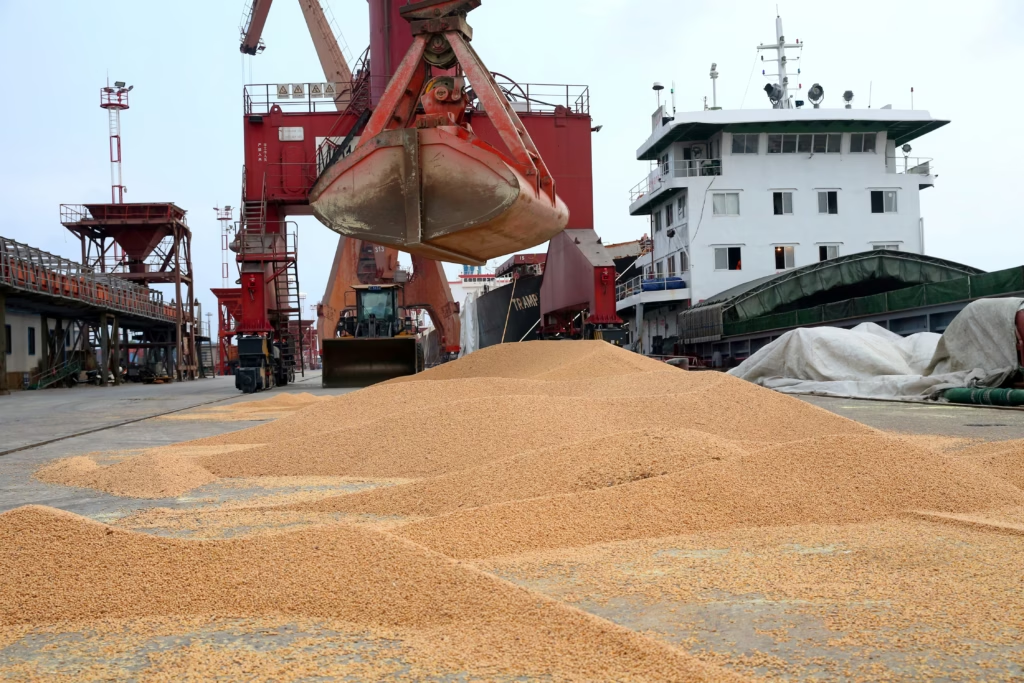
Credit line: “Imported soybeans are transported from a cargo ship at a port in Nantong, Jiangsu province, China.” (Photo by Reuters/Stringer, File Photo)
🌍 Key Reference Articles
- “China approves Ethiopian soymeal imports to diversify supply” (Reuters, July 7 2025)
China’s General Administration of Customs greenlit soymeal imports from Ethiopia as of July 3, noting the move is part of a broader strategy to diversify protein sources and reduce reliance on traditional suppliers amid U.S. trade tensions.
Link: https://www.reuters.com/world/africa/china-approves-ethiopian-soymeal-imports-diversify-supply-2025-07-07/ - “Ethiopia Gains Access to China’s Soybean Meal Market” (Ecofin Agency, July 8 2025)
Confirms Ethiopia’s approval date, highlights the country exported ~29,408 tonnes of soybeans to China in 2024 (approx. $18 million), and frames the move as strengthening Ethiopia’s commercial foothold in Asia.
Link: https://www.ecofinagency.com/news/0807-47611-ethiopia-gains-access-to-china-s-soybean-meal-market - “Bunge charters first Argentine soy meal cargo to China” (Reuters, July 8 2025)
Highlights China’s ongoing efforts: Argentina’s 30,000 t first soymeal shipment complements Ethiopia’s entry into the market, underscoring Beijing’s broader diversification agenda.
Link: https://www.reuters.com/business/autos-transportation/bunge-charters-first-argentine-soy-meal-cargo-china-2025-07-08/ - “China’s big feed shift to curb soybean imports, strain small farmers” (Reuters, June 18 2025)
Provides vital context: China is reducing soymeal use in animal feed and exploring alternative protein sources, reinforcing why diversification of imports has become a strategic necessity.
Link: https://www.reuters.com/markets/commodities/chinas-big-feed-shift-curb-soybean-imports-strain-small-farmers-2025-06-18/ - “U.S.-China trade war 2.0: What are the implications for global oilseed markets?” (IFPRI, May 2025)
Though not focused on soymeal imports, this analysis explains the broader context of how tariffs and trade disputes have reshaped China’s sourcing strategies—including pivoting to new suppliers like Ethiopia.
Link: https://www.ifpri.org/blog/u-s-china-trade-war-2-0-what-are-the-implications-for-global-oilseed-markets/
 English
  French